Learn how to audit gambling apps for safety and fairness. Verify licenses, check RNG certificates, test security features, and identify trustworthy mobile gambling platforms.
Gambling AppsiOS & Android App Store
How to audit gambling apps for safety and fairness

Contents
- 1 Table of Contents
- 2 Key Takeaways
- 3 Understanding the basics of gambling app auditing
- 4 Preparing for your self-audit: what mobile gamblers need to check
- 5 Step-by-step guide to auditing gambling apps on mobile
- 6 Common issues found during app audits and how to avoid them
- 7 Explore trusted gambling apps with confidence
- 8 Frequently asked questions
- 9 Recommended
Choosing a mobile gambling app can feel overwhelming when you face countless options, many promising big wins and seamless play. Yet behind the polished interfaces and enticing bonuses, some apps hide serious risks like rigged games, weak security, or questionable licensing. Learning to audit gambling apps yourself empowers you to separate trustworthy platforms from dangerous ones. This guide walks you through checking licenses, verifying fairness through RNG certification, and assessing security measures so you can gamble confidently on mobile devices.
Table of Contents
- Key takeaways
- Understanding the basics of gambling app auditing
- Preparing for your self-audit: what mobile gamblers need to check
- Step-by-step guide to auditing gambling apps on mobile
- Common issues found during app audits and how to avoid them
- Explore trusted gambling apps with confidence
- Frequently asked questions
Key Takeaways
| Point | Details |
|---|---|
| Verify licenses and certifications | Verify licenses and independent certifications from recognized labs before depositing funds. |
| RNG verification checks | Conduct self audits to confirm RNG integrity and verify responsible gambling tools are in place. |
| Penetration and security testing | Penetration testing should reveal vulnerabilities that could enable fund theft or audit log tampering. |
| Standards and real world tests | Combine technical standards with real world testing to ensure reliability and security. |
Understanding the basics of gambling app auditing
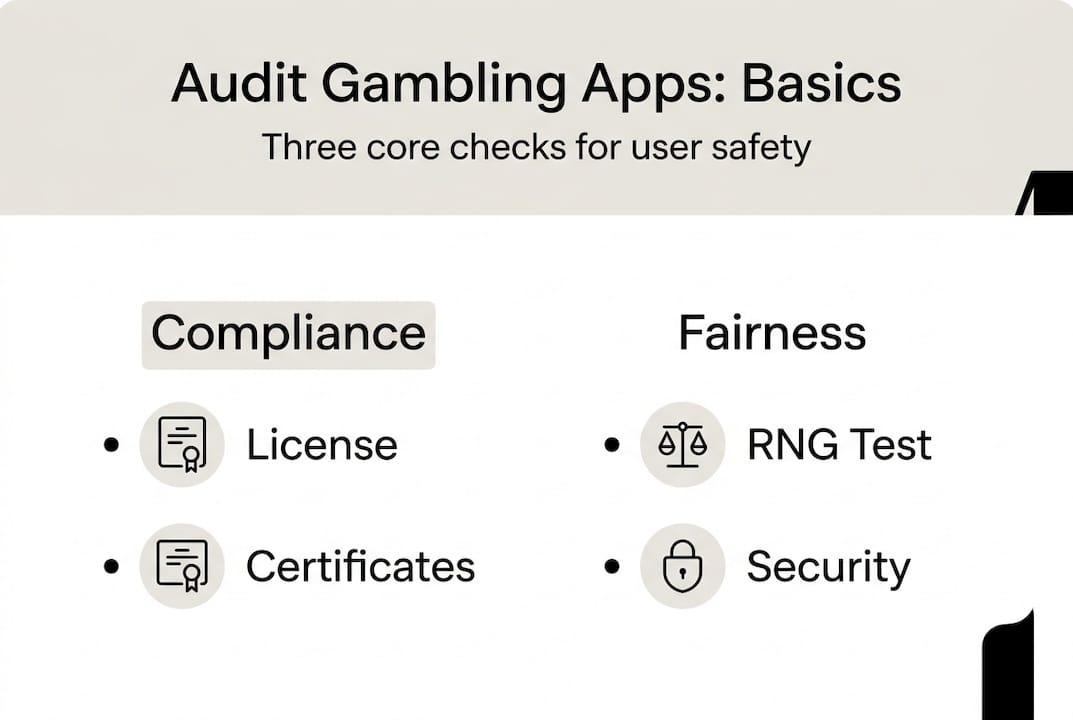
Gambling app audits rely on three core methodologies that work together to protect players. Compliance audits using GLI-GSF standards verify licensing and regulatory adherence, ensuring operators meet jurisdictional requirements. Technical security assessments include vulnerability scans and penetration testing to identify exploitable weaknesses in the app infrastructure. Fairness testing focuses on random number generation and return to player percentages, confirming games operate without bias.
Industry labs like iTech Labs and eCOGRA provide independent certification that operators cannot manipulate. These organizations test millions of game rounds to verify statistical randomness and proper payout rates. Their certifications appear as seals or badges within legitimate gambling apps, though you should always verify these directly on lab websites rather than trusting operator claims.
Audit frequency matters as much as methodology. Annual assessments catch issues that emerge from software updates or infrastructure changes. Some jurisdictions require audits whenever operators deploy major updates, creating a continuous verification cycle. On-demand audits triggered by player complaints or regulatory concerns provide additional oversight layers.
- Compliance audits verify operator licenses match jurisdictional requirements and gaming control board approvals
- Technical assessments scan for SQL injection vulnerabilities, weak encryption protocols, and session management flaws
- Fairness testing analyzes RNG output across millions of spins to detect patterns or predictable sequences
- Certification labs publish detailed reports showing test methodologies and statistical confidence intervals
- Reputable operators display current audit certificates prominently and update them within 30 days of expiration
Understanding these basics helps you evaluate best gambling apps for Android with the same rigor professionals use. You gain the ability to spot apps that skip critical audits or rely on weak certifications from unknown labs. This knowledge transforms you from a passive user into an informed evaluator who can assess risk before depositing funds.
Preparing for your self-audit: what mobile gamblers need to check
Before diving into technical testing, you need to verify foundational elements that signal app trustworthiness. Valid licenses from MGA and UKGC provide stronger player protections than permits from offshore jurisdictions with minimal oversight. Check license numbers directly on regulator websites rather than trusting screenshots within the app, as fraudulent operators often display fake credentials.
RNG certificates require similar verification. Visit lab websites like GLI, eCOGRA, and iTech Labs to confirm the operator appears in their client lists with current certifications. Labs publish certificate numbers and expiration dates, making verification straightforward. If an app claims certification but you cannot find supporting documentation on the lab site, consider it a major red flag.
Responsible gambling tools reveal how seriously operators take player welfare. Test deposit limits by setting a low threshold and attempting to exceed it. Legitimate apps block transactions immediately and display your remaining limit. Look for 24-hour cool-off periods that prevent you from reversing limits during emotional moments. Session time reminders and self-exclusion options demonstrate additional commitment to player protection.
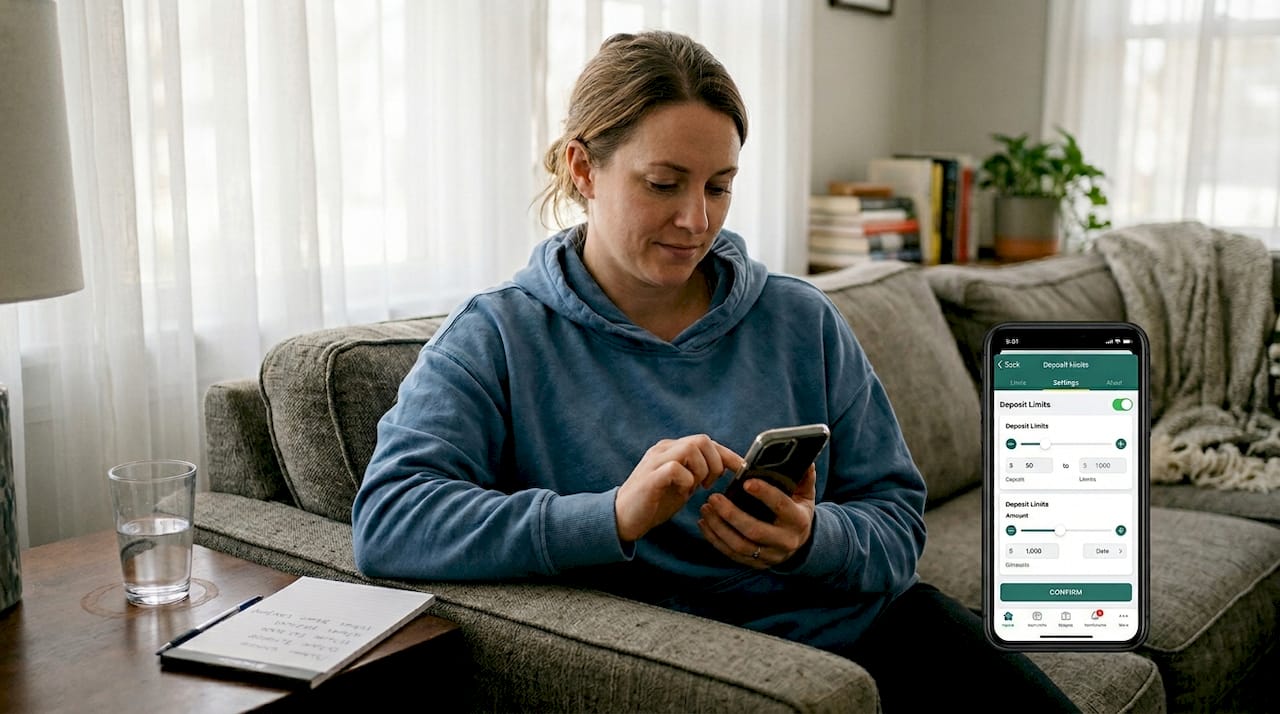
Security measures form your financial safety net. AES-256 encryption protects data in transit between your device and app servers. Two-factor authentication adds a second verification layer that stops unauthorized access even if someone steals your password. Check for these features in account settings before making your first deposit.
Stress testing with small transactions reveals how apps handle real money. Deposit $10 and immediately request withdrawal to observe processing times and identity verification prompts. Legitimate operators complete KYC checks within 24 to 48 hours and process withdrawals within stated timeframes. Delays exceeding one week or requests for excessive documentation suggest potential payout problems.
- Verify license validity by entering the permit number on the regulator’s official verification portal
- Cross-reference RNG certificate dates with lab publication records to catch expired or fabricated claims
- Test responsible gambling limits with amounts you can afford to lose during verification
- Enable 2FA immediately after account creation to establish security before depositing larger sums
- Document withdrawal request timestamps and communication to track operator responsiveness
Pro Tip: Create a verification checklist in your notes app with each audit element and completion status. This systematic approach prevents you from skipping critical checks when evaluating multiple gambling apps simultaneously. Include direct links to regulator and lab verification pages for quick reference.
These preparation steps establish whether an app deserves deeper investigation. Apps failing basic license or certification checks warrant immediate rejection regardless of attractive bonuses or game selection. You protect your gambling budget by eliminating obvious risks before they access your funds.
Step-by-step guide to auditing gambling apps on mobile
Executing a thorough audit requires following a structured process that covers all critical risk areas. Start by documenting your findings at each step to build a complete risk profile before making deposit decisions.
Step 1: Verify licensing and certifications online by visiting regulator websites directly. Enter the license number displayed in the app footer into the jurisdiction’s verification portal. Confirm the license status shows as active with no sanctions or warnings. Check the license issue date and renewal schedule to ensure currency.
Step 2: Check RNG certificates and fairness reports using official lab sources. Navigate to iTech Labs, eCOGRA, or GLI websites and search their certified client databases. Download published audit reports when available and review test methodologies. Look for statistical confidence levels above 95% and p-values exceeding 0.05 in randomness tests.
Step 3: Test key security features including encryption and multi-factor authentication. Verify the app URL displays HTTPS with a valid security certificate. Enable 2FA in account settings and confirm it requires authentication codes for login and withdrawal requests. Check if the app forces logout after periods of inactivity.
Step 4: Conduct functional testing of responsible gambling tools and session management. Set deposit limits at various thresholds and attempt to exceed them through different payment methods. Activate reality checks that display time and money spent at regular intervals. Test self-exclusion features with short timeframes like 24 hours to verify they block access completely.
Step 5: Review audit log integrity and app behavior under edge cases. Force close the app mid-game to see if your balance updates correctly upon restart. Disconnect from WiFi during a bet to observe how the app handles connection drops. Check transaction history for complete records including timestamps, amounts, and game identifiers.
Step 6: Stress test deposit and withdrawal processes for timing and error handling. Make a minimum deposit and request immediate withdrawal to measure processing speed. Submit incomplete KYC documents to see if the app provides clear guidance on requirements. Test multiple payment methods to identify any that process faster or more reliably.
| Audit Component | Expected Check | Tools Needed | Pass Criteria |
|---|---|---|---|
| License Verification | Active regulatory status | Regulator website, license number | Current license with zero sanctions |
| RNG Certification | Statistical randomness proof | Lab database search, audit reports | Certificates under 12 months old |
| Encryption Standard | AES-256 implementation | Browser security info, app settings | Valid SSL with HTTPS protocol |
| Authentication | Multi-factor availability | Account security settings | 2FA required for withdrawals |
| Responsible Tools | Functional limits and blocks | Test deposits, time tracking | Limits enforce immediately |
| Withdrawal Speed | Processing within stated terms | Small test transaction | Completion within 48 hours |
Penetration testing requirements mandate annual assessments covering game manipulation, fund theft, audit log tampering, and unauthorized data access. While you cannot perform professional penetration tests yourself, you can verify the operator publishes recent security audit results. Look for reports dated within the past 12 months that detail testing scope and remediation of identified vulnerabilities.
Pro Tip: Save screenshots at each audit step showing license numbers, certificate dates, and security settings. This documentation helps you compare apps objectively and provides evidence if you need to file complaints with regulators or dispute resolution services later.
Completing this systematic audit before depositing significant funds dramatically reduces your risk exposure. You gain confidence that the app meets professional standards for fairness and security. This process also helps you identify which apps deserve your business based on transparent operations rather than marketing promises. When evaluating options to choose a reliable online casino, apply these same audit steps consistently.
Common issues found during app audits and how to avoid them
Professional audits regularly uncover problems that put player funds and data at risk. Understanding these common findings helps you recognize warning signs during your own evaluations.
Weak encryption represents one of the most frequent security failures. Apps using outdated TLS 1.0 or 1.1 protocols expose your login credentials and financial information to interception. Lack of session timeouts allows unauthorized users to access accounts left open on shared devices. Audit log manipulation vulnerabilities let bad actors cover their tracks after stealing funds or altering game outcomes.
Insufficient RNG randomness appears when operators use predictable seed values or fail to properly implement cryptographic random number generators. Statistical tests alone miss integration flaws where RNG output feeds incorrectly into game logic. Full integration and API testing catches these issues that pure mathematical analysis overlooks.
Apps lacking continuous monitoring cannot detect attacks in progress or respond to emerging threats. Network segmentation failures allow attackers who breach one system component to access databases containing player information and financial records. Missing anti-cheat features enable collusion between players or exploitation of game mechanics for unfair advantages.
- Encryption weaknesses often manifest as mixed content warnings in browsers or missing padlock icons in mobile apps
- Session management flaws become apparent when apps remain logged in after force closing or device restarts
- RNG problems show up as improbable losing streaks or patterns in card dealing that defy statistical probability
- Monitoring gaps reveal themselves through delayed responses to reported security incidents or account compromises
- Segmentation issues surface when customer support staff can access financial transaction details beyond their job requirements
Observing suspicious app behavior provides early warning of potential problems. Games that freeze during winning rounds but run smoothly during losses suggest manipulation. Withdrawal requests that trigger sudden account reviews after months of smooth deposits indicate selective enforcement designed to delay payouts. Apps that update terms of service frequently without clear notification may be responding to regulatory pressure or covering operational problems.
Audit report red flags include vague language about testing methodologies, missing statistical confidence intervals, or certifications from unknown labs with no industry track record. Reports should detail specific tests performed, sample sizes analyzed, and clear pass or fail determinations for each component evaluated.
“Layered security including encryption for data in transit and at rest, network segmentation, continuous monitoring, and anti-cheat validation provides comprehensive protection. Relying solely on statistical RNG testing without full integration and API verification leaves critical vulnerabilities unaddressed.”
Avoiding these issues requires choosing apps that demonstrate commitment to security through regular third-party audits, transparent reporting, and rapid response to identified vulnerabilities. Apps that publish detailed security policies and maintain bug bounty programs show they take protection seriously. When operators hide behind vague assurances or refuse to provide audit documentation, treat it as a deal breaker regardless of other attractive features.
Your gambling responsibly guide should include security awareness as a core component. Recognizing these common audit findings transforms you into a more sophisticated evaluator who can spot problems before they impact your bankroll. The time invested in thorough evaluation pays dividends through reduced risk and greater confidence in your chosen platforms.
Explore trusted gambling apps with confidence
Now that you understand how to audit gambling apps systematically, you can make informed choices about where to play. Selecting apps from trusted sources with verified audits saves you time and reduces risk exposure significantly. Our platform thoroughly evaluates each app for licensing, fairness, and security before featuring it in our marketplace.
Top recommended apps like the Bovada mobile app undergo rigorous verification including license confirmation, RNG certificate validation, and security assessment. We test responsible gambling tools and withdrawal processes so you can focus on enjoying games rather than worrying about safety. Every featured app meets strict standards for player protection and operational transparency.
Apply your new audit knowledge while exploring our curated selection of best gambling apps for Android. Compare apps based on the criteria you learned, from encryption standards to responsible gambling features. Our detailed reviews highlight each app’s strengths and any limitations you should consider. Access responsible gambling resources that complement your audit skills with strategies for healthy play. Start your journey toward safer, more confident mobile gambling today.
Frequently asked questions
How often should gambling apps undergo audits?
Gambling apps typically receive annual audits or assessments triggered by major software updates. This frequency ensures ongoing compliance with evolving regulations and maintains security against new threats. Some jurisdictions mandate additional audits when operators change game providers or payment processors, creating multiple verification points throughout the year.
What licenses should I look for when auditing a mobile gambling app?
Prioritize apps holding licenses from the Malta Gaming Authority or UK Gambling Commission over permits from weaker offshore regulators. These authorities enforce strict player protection standards and maintain public registries you can verify independently. Always check certificates directly on regulator websites rather than trusting operator claims, as fraudulent apps often display fake credentials.
How can I verify if the random number generator in an app is fair?
Check for current certifications from trusted labs like GLI, eCOGRA, or iTech Labs that test RNG output. Look for published RTP percentages between 92% and 97%, which represent industry standards for fair games. Verify auditor reports show RNG statistical tests passed with p-values exceeding 0.05, confirming proper randomness across millions of game rounds.
What security features should I test during my audit?
Test for AES-256 encryption protecting data in transit and storage, plus multi-factor authentication availability for account access. Check for session timeouts, network segmentation, continuous monitoring, and anti-cheat tools that prevent exploitation. Verify audit log integrity measures that track all account activities and cannot be tampered with by unauthorized users.
Recommended



Top Casinos

Bovada Sports Betting App

Play Responsible 🔞
Play Responsible 🔞

Play Responsible! ㉑⁺

Recent News